Blog

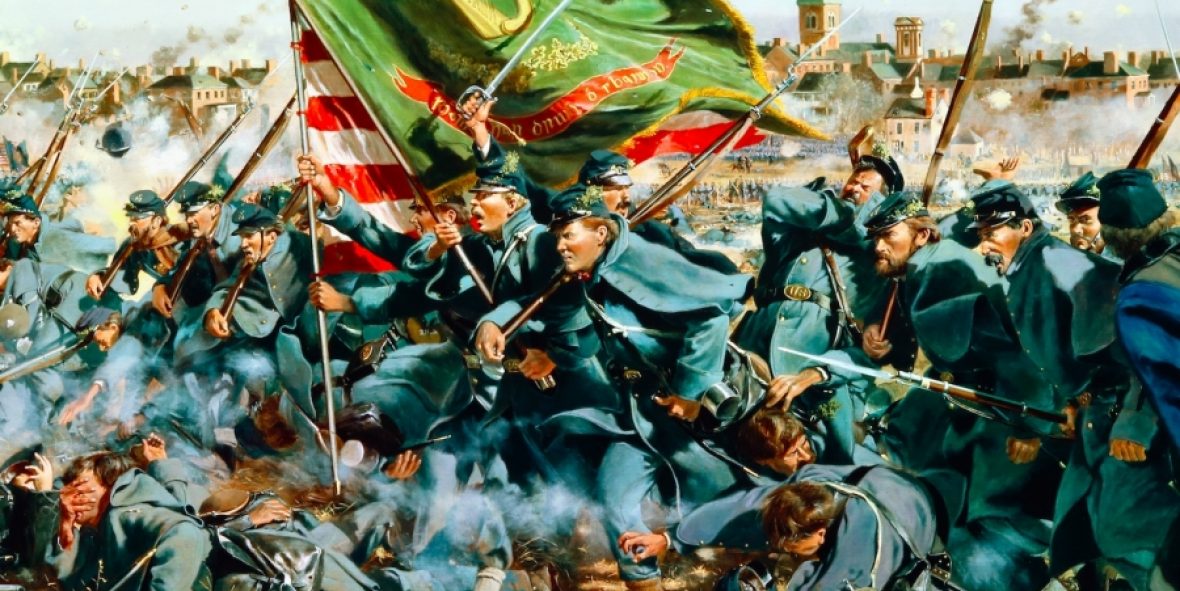
Thomas Francis Meagher died 1867

#OnThisDay 1867 Thomas F. Meagher, the Young Irelander, exiled to Van Dieman’s Land, escapee, American Civil War General, leader of the Irish Brigade, Governor of Montana & first man to fly the Irish Tricolour in public drowned after falling from a ship on the Missouri River. His body was never found. The circumstances around his death are mysterious and rife for conspiracies. Some say he was drunk and fell over board, others say he was poisoned, others again say that he was killed by disgruntled Confederates.

TF Meagher

The Battle of the Boyne 1690

#OnThisDay 1690 (Old Style Calendar) The Battle of the Boyne was fought between the armies of William of Orange & the deposed King James II. It was a victory for William who had a larger, more experienced army. The Irish contested the field bravely but their heart and bravery could only do so much against a larger and more competently lead force. Patrick Sarsfield reputedly said to one Williamite officer, ‘Change Kings, and we’ll fight again”- a jibe at the ineptitude of James II on the battlefield.

Though the war continued for another year, both Kings left Ireland immediately after the battle. William returned to England to run the continental war and James fled to go back to France. He fled so quick that he got the Irish nickname Séamus a’ chaca (James the shit).

This battle and the war was a victory for the Williamites and the Protestants in Ireland. It has left long lasting effects on the Island of Ireland, politically, religiously and land ownership.

Boyne

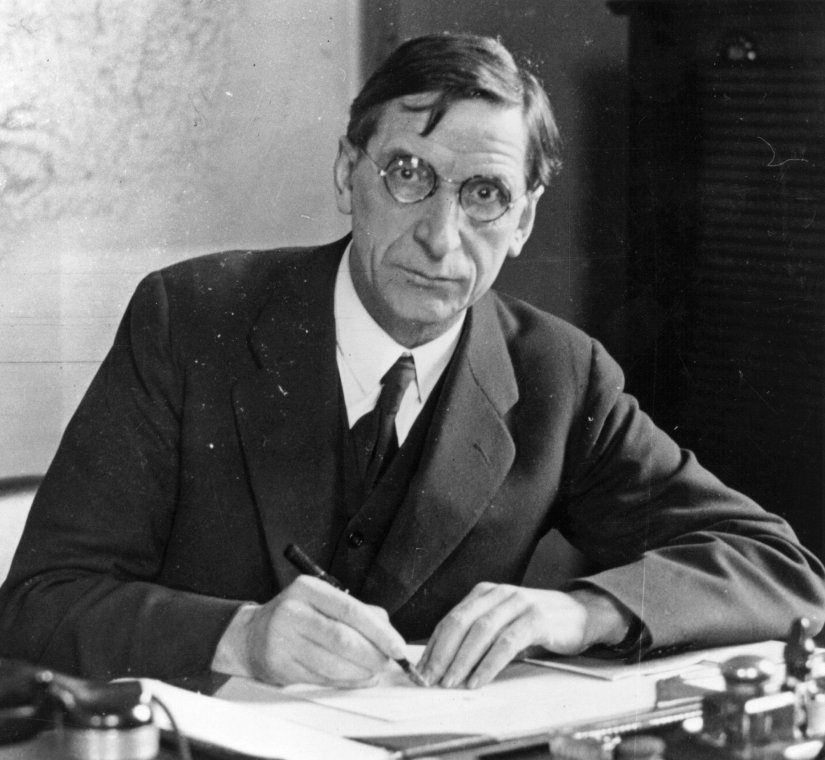
Éamon de Valera Stops Land Annuities to Britain sparking Economic War 1932

#OnThisDay 1932 Éamon de Valera announces Ireland will stop land annuities owed to Britain from the various Land Acts, thus starting the Economic War. Although there was the Coal-Cattle Pact in 1935 between the two nations, the war ended in 1938 with the Anglo-Irish Agreement which saw the Irish Gov pay Britain a lump sum of £10,000,000 in return of the three Treaty Ports which ensured Irish ‘neutrality’ in WW2. Irish Neutrality during the Second World War being as nebulous as it was.

De Valera

The AT-IRA Surrender the Four Courts Garrison 1922

#OnThisDay 1922 In the morning, there is a temporary truce at the Four Courts so that anti-Treaty wounded could be evacuated.  Soon after fighting resumes, there is a large explosion inside the Four Courts.  While the officers inside the Four Courts discuss surrender or fighting their way out, a message arrives from Oscar Traynor ordering them to surrender.  Shortly afterwards (about 4.00pm), the anti-Treaty garrison in Four Courts surrenders.  There had been eight casualties in the defence of the Four Courts including two fatal casualties (Tom Wall and John Cusack). Joe McKelvey, Rory O’Connor, Liam Mellows, Dick Barrett, (These four were later executed) Tom Barry and Ernie O’Malley are captured along with about 100 others.  General JJ O’Connell, who had been captured by the AT-IRA before the shelling began, is released.  (O’Malley escapes on way to Mountjoy along with five others and Barry escapes in August.)

Four Courts

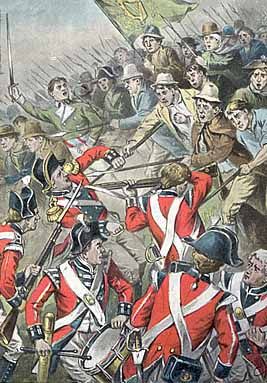
Battle of Ballyellis, Wexford 1798

#OnThisDay 1798 United Irishmen scored one last win over the Crown Forces in Wexford, when they lured a 200 man cavalry unit called The Ancient Britons (from North Wales) into a three sided ambush site in Ballyellis.

The cavalry unit had been in pursuit of the 1000 strong rebel column and had made some attacks on stragglers and foragers in the previous days. They eventually caught up with the main column and sped up to attack. However, fortunately for the column, they saw the Crown forces first and made hasty arrangements for an ambush.

The ambush site was on a bend in the road bordered by high, thick ditches of crab and thorn on both sides, a high wall belonging to an old deer park and a dyke five feet deep. The road was also blocked with wagons and a small force placed on the roadway to lure the cavalry into the trap. Upon spotting the small force standing on the road, the pursuing British quickened their pace and charged forwards, assuming that they were facing only the rear-guard of the fleeing column. The government troops fell for the ruse and charged the apparent rear-guard of the fleeing column only to be met with rebel fire from three sides. The rear-ranks quickly fled with a few more soldiers escaping by jumping their mounts over the ditch but the rebels organised a relentless pursuit of the soldiers who were tracked and killed through the adjoining fields. In his memoirs, General Holt talks of the black trumpeter Anthony King being ‘most tenacious at life and taking more piking than five white men’ before he died. A pike man severed his ears to take his gold earrings. He also tells of a boy piking a militia and not being able to remove the pike.’

 In the ambush and subsequent pursuit the military, the Ancient Britons, lost over sixty troops (including a French émigré) and two officers were killed. There were no rebel casualties.”
 

Ballyellis