Blog

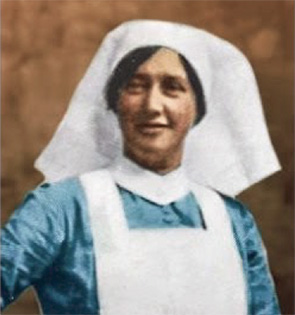
Elizabeth O’Farrell, Irish Nationalist & Easter Rising Survivor Passed Away 1957

#OnThisDay 1957 Elizabeth O’Farrell passed away while on holiday in Bray.
‘Elizabeth trained as a nurse and midwife at the National Maternity Hospital, Holles Street, Dublin. Both Elizabeth and Julia Grennan (a lifelong friend but most likely they were in a relationship together) joined the Gaelic League as they were proficient in Irish. They had joined the Irish Women’s Franchise League and were suffragettes. In 1906 they joined Inghinidhe na hÉireann and also later joined Cumann na mBan, the women’s branch of the Irish Volunteers. Elizabeth and Julia were sent around the country as couriers delivering important information.

On Easter Monday several women were in the General Post Office in Dublin including Elizabeth and Julia who tended to the wounded. When the order came to evacuate, the two women decided to remain behind together with Winnie Carney who wouldn’t leave the wounded James Connolly.

On Saturday 29th April the decision was made by Padraig Pearse to surrender. Elizabeth was chosen to deliver the unconditional surrender to General Lowe who was the Senior Officer of the British troops. Accompanied by a priest and three soldiers, O’Farrell brought the order to surrender, signed by Pearse, to the Volunteer and Citizen Army units at the Four Courts, the College of Surgeons, Boland’s Mill and Jacob’s factory. She dodged sniper fire and dealt with confrontational British authorities. She returned with a note and instructions from the British. The British refused to treat until Pearse himself surrendered and met with the British at the British Headquarters in Britain Street. Elizabeth then criss-crossed the city to convince the Rising leaders that the decision to surrender was genuine, ordering them to lay down their arms and line up in O’Connell Street. Later she was recommended for clemency as General Lowe stated that she had been of “Great assistance by voluntarily accompanying a staff officer to various Rebel Commandants”.’

Lowe gave her his word that she would not be held as a prisoner after delivering these orders. Despite this, O’Farrell was then taken to the Dublin Castle hospital where she was stripped of her clothing and possessions and stayed for one night. The following day she was taken to Ship Street barracks, and was informed was to be sent to Kilmainham jail and held as a prisoner. O’Farrell and some other prisoners were escorted to Richmond Barracks. It was then that O’Farrell noticed Fr. Columbus of Church Street, who had accompanied her to the Four Courts on the evening of 29 April. He told her he would let General Lowe know of her situation. After being sent to Kilmainham jail she was later released.

O’Farrell remained an ardent republican for the rest of her life. When the Government began collecting the oral history of the Revolutionary Period, O’Farrell refused to give her’s saying “All governments since 1921 have betrayed the Republic.”
Elizabeth O'Farrell

Carlow Man, Myles Keogh Killed at Battle of Little Bighorn 1876

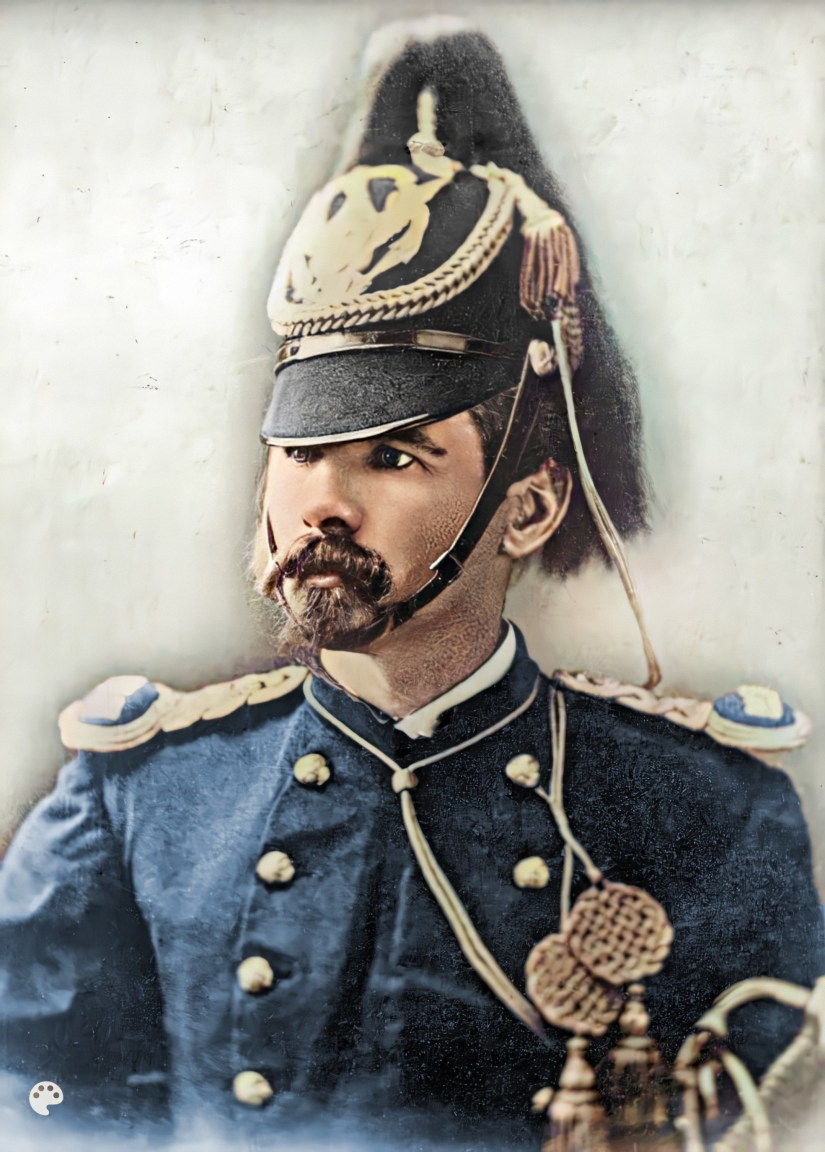
#OnThisDay 1876 Myles Keogh from Leighlinbridge, Carlow was one of 268 soldiers of Custer’s 7th Cavalry to die fighting Sioux & Cheyenne warriors at the famous Battle of Little Bighorn in Montana.  Keogh was the most senior captain present of the five companies.

Keogh had previously served in the Papal Service defending Papal states from Italian Nationalists in the process of unification. He was awarded two medals for valour during the conflict- the Pro Petri Sede and Ordine di San Gregorio. However, the Papal army surrendered and with little fighting going on he surrendered his commission with the Papal army in 1862.

With the American Civil War raging, Secretary of State William H. Seward began seeking experienced European officers to serve the Union, and called upon a number of prominent clerics to assist in his endeavour. John Hughes, Archbishop of New York, travelled to Italy to recruit veterans of the Papal War, and met with Keogh and his comrades. Keogh then left for the States.

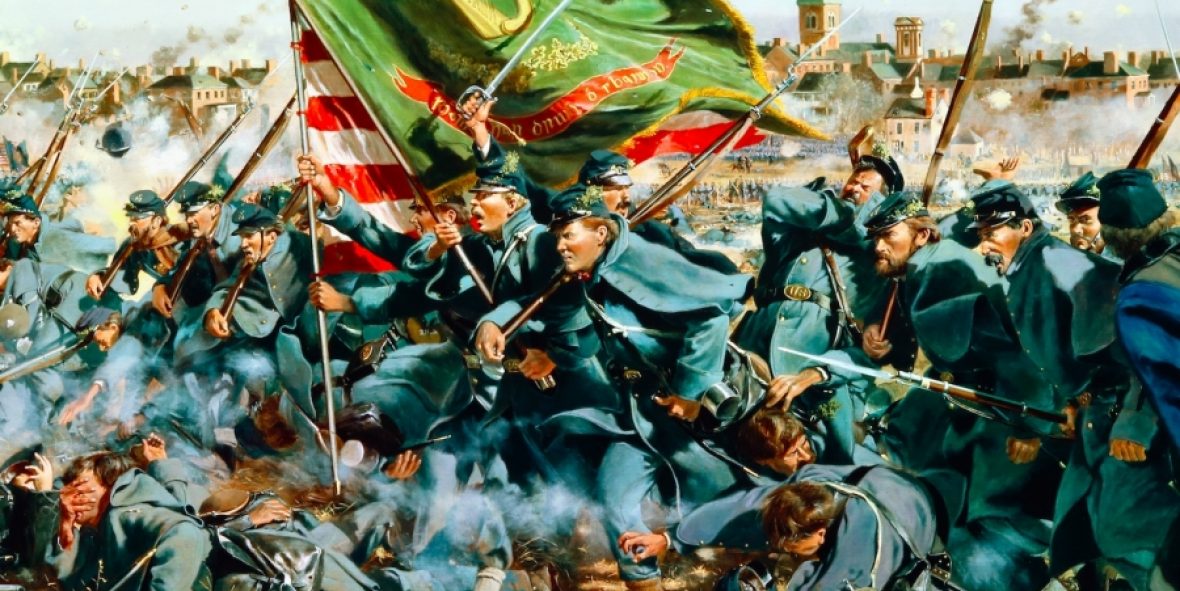
Keogh kept his rank of Captain and fought in many famous battles of the American Civil War, like Gettysburg, Port Republic, Second Bull Run, Antietam. It was at the early stages of Port Republic on June 8 1862 that Keogh and his men almost captured Stonewall Jackson. Brigadier General John Buford, the tough, veteran horse soldier found his Irish aides just the type of officers he was looking for, commending them as “dashing, gallant and daring soldiers.” Army of the Potomac commander George McClellan was equally impressed, describing Keogh as “a most gentlemanlike man, of soldierly appearance,” whose “record had been remarkable for the short time he had been in the army.” By the end of the war, 25 year old Keogh was a lieutenant colonel.

After the Civil War ended, Keogh stayed in the Army but was put back down to Captain. He joined the new 7th Cavalry led by the ‘Boy General’ George Custer. He fought in the Indian Wars. At the Battle of Little Bighorn, Keogh was the only Irish officer & most senior captain of the five companies. He died in a “last stand” of his own, surrounded by the men of Company I. Keogh’s body was found at the centre of a group of troopers that included his two sergeants, company trumpeter and guidon bearer. The slain officer was stripped but not mutilated, perhaps because of the “medicine” the Indians saw in the Agnus Dei (“Lamb of God”) he wore on a chain about his neck or because “many of Sitting Bull’s warriors” were Catholic. Keogh’s left knee had been shattered by a bullet that corresponded to a wound through the chest and flank of his horse, indicating that horse and rider may have fallen together prior to the last rally. His horse Comanche was the ‘Lone Survivor’ of the battle.

136 of the soldiers in the 7th Cavalry were Irish-born, over 30 Irishmen also died that day too.

Myles Keogh colour oiic

Erskine Childers Born in London 1870

#OnThisDay 1870 Erskine Childers was born in London. His parents died when he was just a boy and he was sent to his mother’s family, the Barton’s in Glendalough. He studied aw at Trinity College, Cambridge and then worked in Westminster as a junior clerk.
He served as an artilleryman in the Boer war, where he wrote Volume V of “The Times History of the War in South Africa”, published in 1907.
His best known novel is ‘The Riddle of the Sands’, from 1903 which predicted a war with Germany is still in print today and is still included in “The 100 Greatest Novels of All Time”.

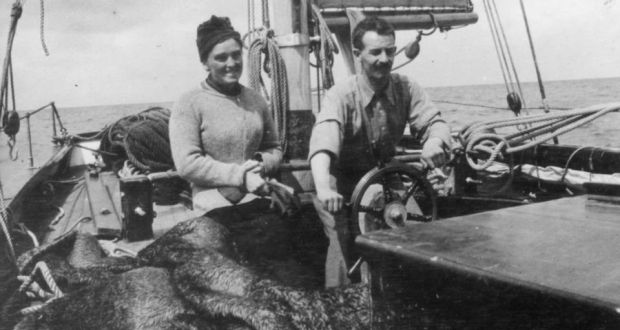
Childers smuggled 900 Mauser Rifles and 29,000 rounds of ammunition, bought from Germany, to the Irish Volunteers in what became famously known as the Howth Gun Running in June 1914 aboard his personal yacht, the Asgard, a 28 ton ship he received as a wedding present in 1904.

In August 1914 he volunteered at the outbreak of war and received a temporary commission as a Lieutenant in the Royal Naval Reserve. He was to plan an invasion of Germany via the Frisian Islands which never took place. He was then transferred to the Mediterranean Sea to serve in the Gallipoli Campaign, where he was awarded the Distinguished Service Cross.

The aftermath of the Easter Rising and the execution of the leaders that angered him. He was assigned to accompany the Irish delegates at the Paris Peace Treaty and then became Director of Publicity in the First Dáil. In 1920 Childers published Military Rule in Ireland, which attacked the heavy-handedness of British policy.

Childers was part of the team of plenipotentiaries who negotiated the Treaty with the British Government but he disagreed with it, especially the Oath of Allegiance. He took the Anti-Treaty side in the Civil War. He was arrested and tried in a military court for possession of a Spanish pistol which was given to hm by the Head of the Provisional Irish Government, Michael Collins.

Childers was executed at Beggars Bush Barracks on November 24th 1922 having first shaken hands with each member of the firing squad.

I have a belief in the beneficent shaping of our destiny and I believe God means this for the best, for us, Ireland, and humanity. I die full of intense love of Ireland.”

He then said to the firing squad
“Take a step or two forward, lads, it will be easier that way.”
His son was inaugurated as President on this day 25th June 1973.

Childers

United Irishmen Leaders Executed On Wexford Bridge 1798

#OnThisDay 1798 Fr. Philip Roche, Matthew Keogh & other United Irishmen leaders were hanged on Wexford Bridge.

Fr. Roche, who was present at Vinegar Hill brought his column back to Three Rocks camp but knowing that the rebellion could not be won, he left on his own, went to Wexford town and surrendered. He was pulled from his horse, beaten and court-martialled. He was to. behanged also.
The gallows was rudimentary and the leaders were dragged from their feet several feet up into the air. The rope around Fr. Roche snapped and his unconscious body fell to the ground. Once he was revived, he was subjected to the whole ordeal again. His body was then thrown into the River Slaney.

Matthew Keogh was the presiding officer (effectively the Military Governor) of the Council of the People, a representative body the rebels had organised when they took the town earlier in the rebellion. He stayed in the town when the Crown Forces retook it, expecting his life to be spared but he was immediately subjected to a drumhead court-martial. He too was sentenced to be hanged. Being a protestant, Keogh said some prayed with an Anglican minister and a short speech before his death. The rope was placed around his neck and he met his end. However, even in death, the abuse was not over. His body was beaten again, then was beheaded, his body thrown in the Slaney & his head paraded through the streets of the  town on a pike before being placed on display outside the court house.

Nihilists Executed in Russia, 1881

The Adavoyle Train Ambush 1921

#OnThisDay 1921 Frank Aiken’s Northern IRA Division mine & derail a troop train carrying 113 men of the 10th Hussars and 104 horses. They had been part of the Royal Escort in King George V’s trip to Belfast, and were returning to their barracks in Belfast. The incident happened at Adavoyle near Newry. Three troopers are killed & 20 injured. Over 80 horses are killed too.
A mine was detonated under the train, it was slightly late in going off and went off under the last of the compartments containing soldiers. This carriage and all the following 14 or 15 coaches containing the horses were derailed. These were all horses coaches plus the guards van which had the guard and 2 soldiers (all 3 died). The derailed carriages rolled down a 30 foot embankment. Many of the horses died in the wreck, or had to be put down
No follow up attack on the derailed train by the IRA was planned.

Video footage of the train wreck here: https://www.youtube.com/watch?v=5NJl9c4yuxQ

ADvoyle