Blog

Athlone town falls to the Williamites 1691

#OnThisDay 1691 Athlone falls to the Williamite forces. One of the bravest moments was when Sgt Custume & ten men charged out in full view of the enemy & broke down the repairs, made to the partially destroyed bridge across the River Shannon, denying access to the city to Ginkel for a few more days. Despite wearing some form of body armour, all 11 died doing so.
The Williamite bombardment of the western, Connacht, side of the town was intense, with over 12,000 cannonballs and 600 bombs or mortars fired into the town. During the ten day bombardment, thirty two heavy cannon and mortars fired one shot every minute: Athlone suffered the heaviest bombardment of any city in Britain and Ireland until that point’.

Eventually 2000 of Ginkel’s grenadiers made it across the the Shannon and gained access to the town and opened it up for the rest of the Williamite army.
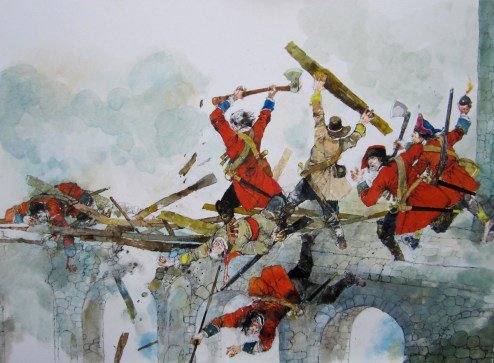
Custume

NEW PODCAST OUT NOW WITH STEPHEN CALLAGHAN

NEW PODCAST EPISODE OUT NOW! I spoke with historian

@stecallaghan01

about his work on the military barracks in Birr, Offaly, as well as his dig on the WW1 mock trenches, his restoration of Captain Studholme’s Cross and more. Listen here:

https://podcasts.apple.com/ie/podcast/stephen-callaghan-on-birr-barracks-war-memorials/id1365677620?i=1000480074758

Screenshot 2020-06-28 at 23.53.49

IRA Raid Fastnet Lighthouse, Cork 1921

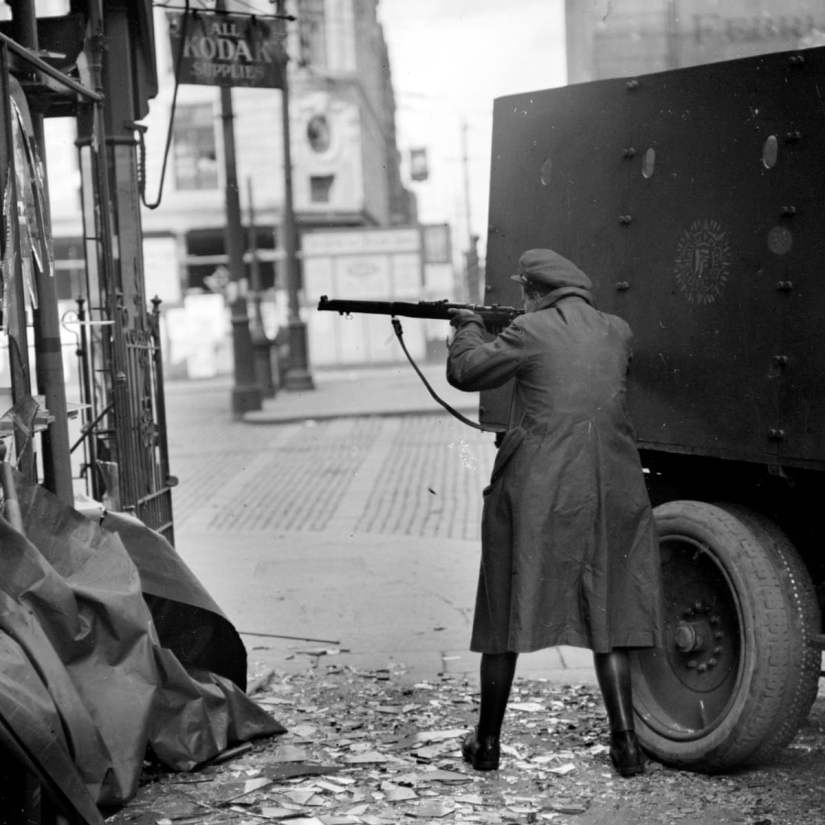
#OnThisDay 1921 The West Cork IRA launched a daring raid on Fastnet Lighthouse to relieve it of the explosives and detonators stored there. The plan was launched by Sean Lehane Commandant of the Schull Battalion but lead by John O’Regan, a local sailor whose expertise was needed in piloting the 12 men aboard the 24 foot fishing vessel out to the lighthouse.

Fastnet is located on an island, 10 miles off the coast and was known for high swells even in times of good weather.  Having waited for the British destroyer to pass the lighthouse on its patrol between Old Kinsale Head and Bantry Bay, the Marie Cait set off in rough seas and O’Regan with a rope tied around his waist, jumped through the eight foot swell to dock their boat safely.

The raiding party made their way up the stairs and luckily for them, the two tonne iron door was not locked. They gained access and the lighthouse keepers put up no fight. They took half a ton of guncotton (explosives) & detonators using the lighthouse crane to load the booty on board the Marie Cait.

The raiders left, got back to shore, unloaded and kept the guncotton under a pile of seaweed which was avoided by the British military patrol the next day.

Fastnet Lighthouse

Timothy Murphy, Sharpshooter Joins Continental Army 1775

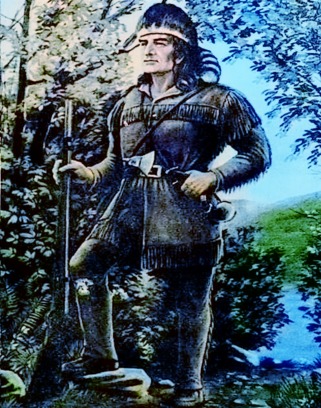
#OnThisDay 1775 Timothy Murphy and his brother (whose parents were from Donegal) joined the Continental Army to fight for American Independence. He initially joined Captain John Lowdon’s Company of Northumberland County Riflemen and fought at the Siege of Boston, crossed the Delaware with Washington and fought at the Battle of Princeton, Trenton and others.

Murphy was able to hit a seven inch target at 250 yards and so qualified for Morgan’s Rifle Corps (Also known as Morgan’s Rifles), an elite light infantry unit commanded by General Danial Morgan. They were equipped what was then the cutting-edge rifle instead of muskets, allowing for a Rifleman to have an effective range of double that of the average infantryman.

In 1777 at the second Battle of Saratoga (Bemis Heights), Murphy climbed a tree & at a range of 300 yards shot British General Fraser & his aide-de-camp, Sir Frances Clerke.
This action earned Murphy the nickname ‘Sure Shot Tim’ and won the battle that turned the tide of the war.

timothy-murphy-sniper-3