Blog

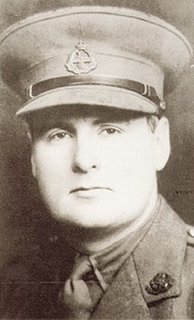
Captain Marcus Ervine-Andrews, First VC of WW2 1940

#OnThisDay 1940 Captain Marcus Ervine-Andrews from Keadue, Cavan received the first Victoria Cross of the war when during the Battle of Dunkirk, he organised a perimeter defence, stalled a large German attack, removed the wounded & returned to the fight.

His Victoria Cross citation reads as:

For most conspicuous gallantry on active service on the night of the 31st May/1st June, 1940. Captain Ervine-Andrews took over about a thousand yards of the defences in front of Dunkirk, his line extending along the Canal de Bergues, and the enemy attacked at dawn. For over ten hours, notwithstanding intense artillery, mortar, and machine-gun fire, and in the face of vastly superior enemy forces, Captain Ervine-Andrews and his company held their position.

The enemy, however, succeeded in crossing the canal on both flanks; and, owing to superior enemy forces, a company of Captain Ervine-Andrews’ own battalion, which was dispatched to protect his flanks, was unable to gain contact with him. There being danger of one of his platoons being driven in, he called for volunteers to fill the gap, and then, going forward, climbed onto the top of a straw-roofed barn, from which he engaged the enemy with rifle and light automatic fire, though, at the time, the enemy were sending mortar-bombs and armour-piercing bullets through the roof.

Captain Ervine-Andrews personally accounted for seventeen of the enemy with his rifle, and for many more with a Bren gun. Later, when the house which he held had been shattered by enemy fire and set alight, and all his ammunition had been expended, he sent back his wounded in the remaining carrier. Captain Ervine-Andrews then collected the remaining eight men of his company from this forward position, and, when almost completely surrounded, led them back to the cover afforded by the company in the rear, swimming or wading up to the chin in water for over a mile; having brought all that remained of his company safely back, he once again took up position.

Ervine-Andrews survived the war and returned home to Cavan to live but was pushed out by the local IRA. He lived out the rest of his life mainly in Cornwall.
Marcus_Ervine-Andrews

Hampshire Regiment band killed by IRA mine in Youghal, 1921

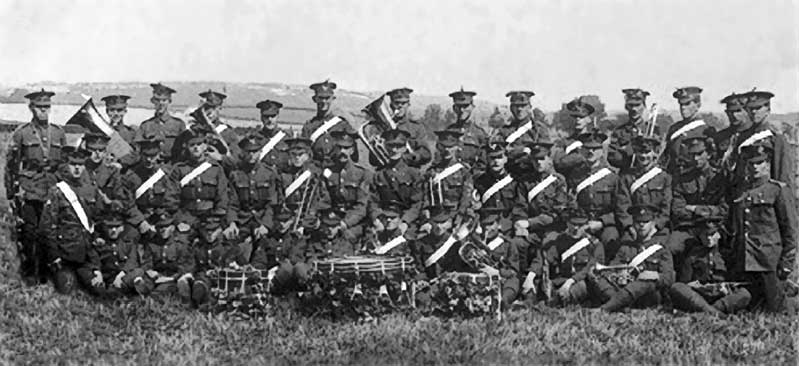
#OnThisDay 1921 Seven soldiers of the Hampshire Regiment band were killed when they marched over an IRA mine (electronically detonated) in the road on their way to the rifle range in Youghal, Cork. Three killed outright, four died later & over twenty wounded.
The 5.9 inch shell had been wired by a bomb maker, Tom Hyde, would would end up fighting in the Irish Brigade in Spain.
Once the fourth or fifth line of the band marched over the mine, it was detonated killing and wounding. The ambushers then opened fire before pulling back. In the crossfire, the local parish priest’s horse driver was caught and killed in the crossfire.

hampshire-band

The Battle of Jutland 1916

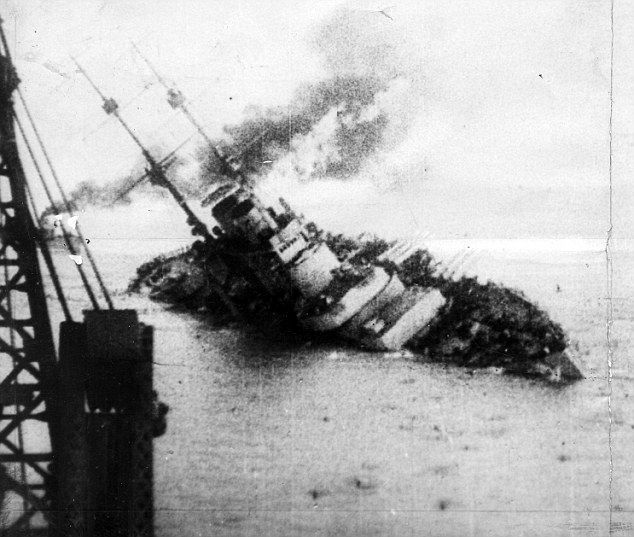
#OnThisDay 1916 The Battle of Jutland, the largest naval battle of WW1 raged in the North Sea between the German and British Navies. Both navies competed with each other in the build up to the war during the ‘Naval Race’, Germany trying to build a navy as powerful as Britains. While it was a tactical victory for the German Navy (They sank more British ships, took more prisoners, suffered less damage), the strategic victory went to the Royal Navy because the German High Seas Fleet never left port again in force.
Roughly 10,000 Irish men served in the Royal Navy during WW1, including my great-grandfather and 358 Irish-men died during the Battle of Jutland & one, Barry Bingham got the Victoria Cross.

(Pic: Not from the Battle of Jutland, actually an Austro-Hungarian ship, but it’s a good pic)

Jutland

The Last Executions of the Irish Civil War 1923

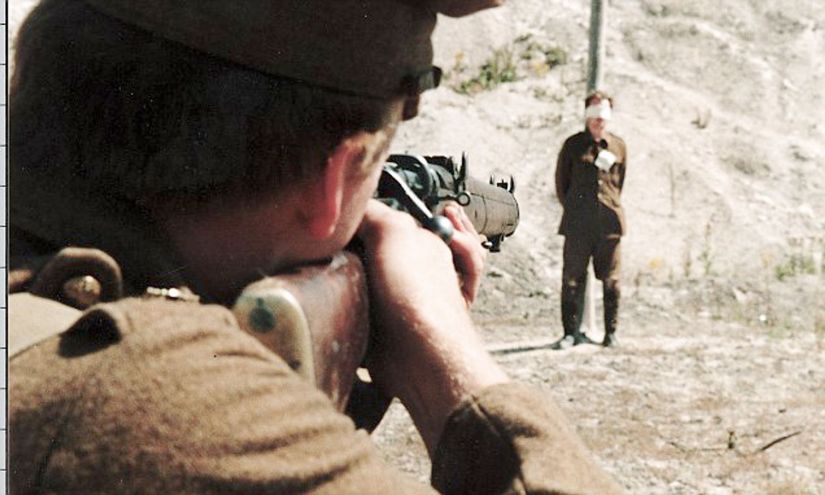
#OnThisDay 1923 Michael Murphy & Joseph O’Rourke were executed for armed robbery of a bank in Tuam, Galway. Both said the money was to pay off farm debts, but the authorities said they had political links to the AT-IRA and that the money was used to buy guns for the AT-IRA. These were the last executions of the Civil War but are not usually listed among the 77 official Government executions during the Civil War.

Executed pair

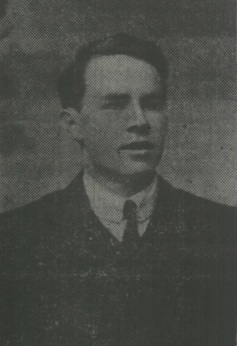
Pvt Francis McBride, Ballycastle, KIA with the AIF 1916

#OnThisDay 1916 Pvt Francis McBride from Ballycastle, Antrim was KIA around Petillon in the Fleurbaix sector of the Western Front. McBride had enlisted in Perth, Australia only 10 months before his death where he was working as an agricultural labourer. He served with the 11th Btn Australian Imperial Force. He & 37 others were killed on their first night on the frontline during a German artillery bombardment and night raid.

mcbride-frank-private-australian-imperial-force-market-street-ballymoney-antrim-died-cc-june-1916