Blog

John Lyons VC 1855

#OnThisDay 1855 At the Siege of Sebastopol during the Crimean War, Private John Lyons, from Carlow, picked up a live shell that landed in his trench among his fellow soldiers of the  19th Regiment of Foot & threw it out, saving his & many lives. For this he was awarded the Victoria Cross.
Lyons and his brother joined the Army in 1842 and over the following decade, John served in Malta and Corfu in the Mediterranean, Barbados and St Vincent in the West Indies and Montreal and Ottawa in Canada before returning to England in 1851. There he served in many garrisons including the Tower of London. Then in May 1854, he departed for the Crimean War where he took part in the battles of Inkerman and Alma before his heroic deed at Sebastopol.

Lyons died on 20th April 1867 in Naas, Kildare aged 44.
In the photo below from 1867, it is the only known photograph of him. Propped up in a chair in full uniform with medals. There is one catch to it though…

Lyons is dead in it.
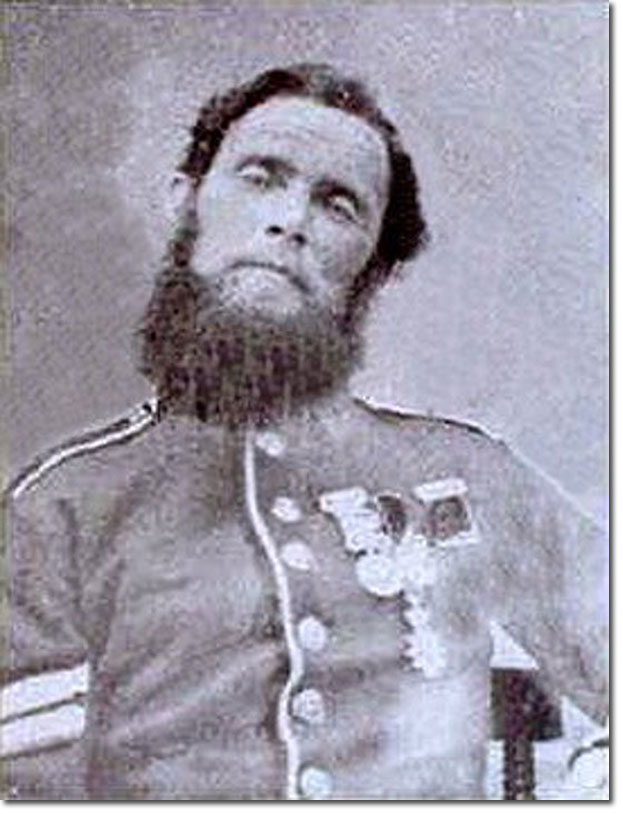
John Lyons VC

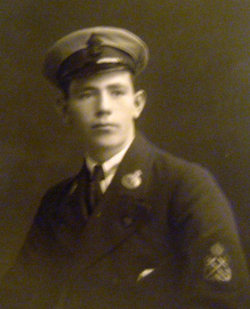
Captain Walter Alexander Tyrrell Ace Pilot KIA 1918

#OnThisDay 1918 Captain Walter Tyrrell MC from Bangor, Co. Down was killed in action when his plane was shot down by anti-aircraft fire while conducting ground attack missions along the Matz River in France. Tyrell, originally worked  Royal Naval Air Service’s Armoured Car Division until one armoured car crushed his foot. He returned to Belfast and retrained as a motor engineer apprentice in  Queen’s University Belfast Officers’ Training Corps.

Tyrell joined the Royal Flying Corps as an officer cadet on 4 April 1917 and was commissioned as a temporary second lieutenant on 21 June. On 30 August 1917 he was appointed a flying officer and confirmed in his rank.
Tyrell flew many missions and became an ace pilot with 17 aerial victories to his name.
Only 11 days later, his older brother John Marcus Tyrrell, of the Royal Irish Fusiliers, attached Royal Air Force, was also killed in action.

Capt

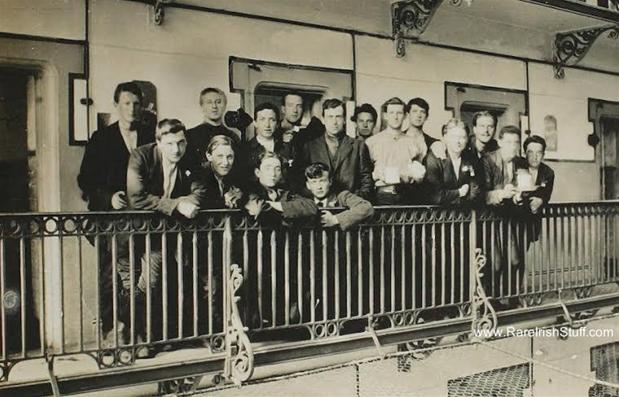
Easter Rising Prisoners arrive at Frongoch 1916

#OnThisDay 1916 The first prisoners from the Easter Rising began arriving at Frongoch Prison in Wales. More would arrive by train two days later. Frongoch was initially used to house German Prisoners of War from the war raging on the continent. Over 3500 people had been arrested following the Rising, despite it having fewer participants than the number arrested.

At the height, there would be 1775 Irish men in the ‘University of Revolution’ including most famously, Michael Collins, fifth from right.

Michael.Collins.-Frongoch.Prison

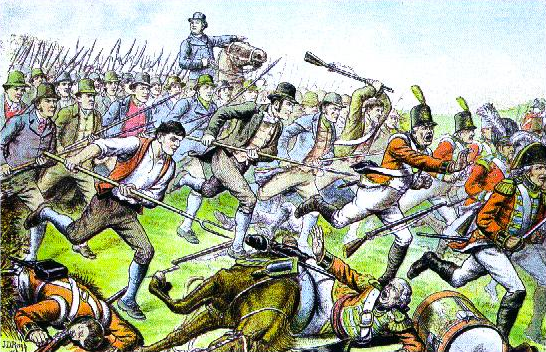
United Irishmen victory at the Battle of Saintfield 1798

#OnThisDay 1798 Roughly 1000 United Irishmen rebels ambush & defeat a force of more than 300 Crown militia & York fencibles under the command of Colonel Granville Stapylton, at the Battle of Saintfield in Co. Down, killing over 50. The rebels hid in roadside woods which flanked the Crown forces approach. Once in the kill zone, the rebels attacked with pike and fierce hand to hand combat took place. The Government forces were only able to beat a withdrawal when they managed to deploy the two cannon and fire grapeshot into the massed huddle of bodies.
Meanwhile in Arklow, a United Irishmen attack is beaten back with the loss of several hundred.

Battle of Saintfield 1798