Blog

The Meelick Ambush 1921

#OnThisDay 1921 East Clare IRA planned to raid the Limerick train to take mail which would reveal the identity of a local spy. The eight IRA men had build a stone barricade across the tracks and put a red flag on top to stop the train. They would then board the train and take what they needed. They also had a man on the train that would give a signal to notify if there were troops on the train.
When the driver, a republican and supporter of the cause of Irish freedom, saw the barricade, he knew there must be an ambush about to take place but he also knew there was 30 British soldiers of the Royal Scots Regiment onboard and if the ambush took place, the IRA would be out numbered and certainly outgunned. He smashed through the stone barricade, which was for the best, as McCarthy did not see the signal from their man on the train.
As the train passed, McCarthy took a pot shot at a soldier on the train. This was a bad idea. The soldiers once they got to Cratloe station made all civilians disembark and at gunpoint forced the train driver to return to Woodcock Hill. McCarthy, knowing his folly, knew that they’d alert the local military barracks so enemy troops would swarm the area. He climbed a telegraph pole to cut the wire but the shears used broke. While another was being fetched, the train returned and the Scots trained their two machine guns and rifles on McCarthy. He was hit and fell to the ground. As the rest of the ambushing party scattered, Gleeson realised that McCarthy wasn’t with them.
Gleeson raced down the open field through a hail of British rifle and machine gun fire. He reached McCarthy and helped him to his feet. In a desperate attempt to escape, Gleeson drew his revolver and staggered uphill supporting McCarthy with one arm and firing back at the British soldiers with his free hand.
They had only covered a short distance when Gleeson was shot and both men collapsed to the ground. Gleeson was unable to continue but McCarthy managed to stagger on. Within a few seconds, the advancing British soldiers surrounded Gleeson and shot him dead where he lay. McCarthy carried on through the fields but was soon outrun and was captured and killed by Lieutenant A Gordan and a group of the Royal Scots, who shot him several times and stabbed him with their bayonets.

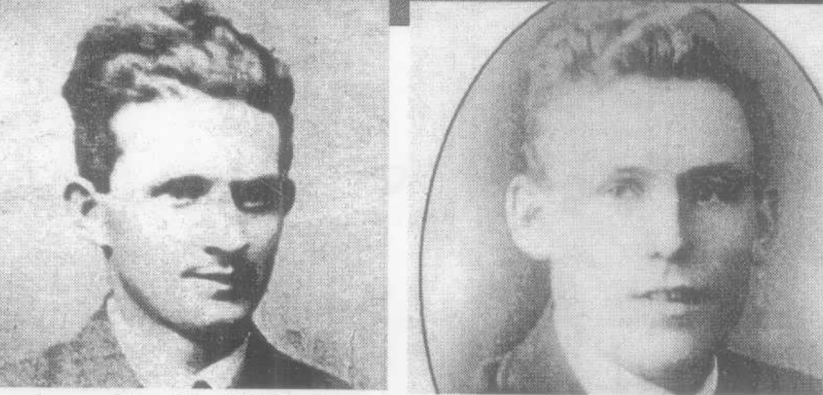
Christopher McCarthy (left) & Michael Gleeson (right).
Screenshot 2020-06-15 at 06.54.19

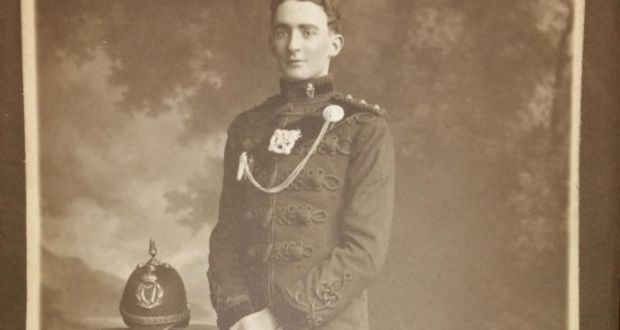
Captain Percival Lea-Wilson RIC District Inspector Assassinated by Collins’ Squad 1920

#OnThisDay 1920 Captain Percival Lea-Wilson RIC District Inspector was shot dead by Michael Collins’ Squad in Gorey, Wexford.
“Tom Keogh, Pat McCrae, Tom Cullen and other Wicklow men were picked to carry out his execution,” according to Paddy O’Daly, one of the leaders of The Squad. “Men who knew the country were sent because they would have to take to the hills.”

Wilson was shot five times as he was walking home with the daily newspaper between nine and ten o’clock in the morning. From the shots heard and bloodstains found, it would seem he was felled initially by two shots but got up and ran for about 15 yards. There were bullet marks on the wall at the side of the footpath. When he went down again, he was shot repeatedly on the ground and died at the scene.

It’s said that Wilson was shot because he was the officer who strip searched and humiliated (and urinated on) Tom Clarke when the rebels surrendered after the Rising. The story goes as follows:
Joe Sweeney happened to be in the bar of the Wicklow Hotel that evening when Collins stomped in. “We got the bugger, Joe.”

“What are you taking about?”

“Do you remember that first night outside the Rotunda – Lea Wilson?”

“I’ll never forget it,” Sweeney replied.

“Well,” said Collins, “we got him today in Gorey.”

Others say that Lea-Wilson was targeted for being a high ranking police official in the county.

Captain Lea Wilson was not shot because he had ill-treated Seán McDermott and other prisoners in 1916 because there were other British officers just as bad as he had been and no attempt was made to shoot them,” O’Daly argued.

“I believe he was shot because of the position he held at the time, and for no other reason. I am satisfied from my long experience with The Squad that no man was shot merely for revenge and that any execution sanctioned by Michael Collins was perfectly justified.”

There had, however, been no rebel activity around Gorey. Nobody has ever suggested any other specific reason for the killing.

“The town has been one of the quietest, if not the quietest, in all Ireland,” the Irish Times noted the day after the killing. “Up to the present nothing has occurred.

lea wilson

Two Irishmen killed in Italy as 38 (Irish) Division advance 1944

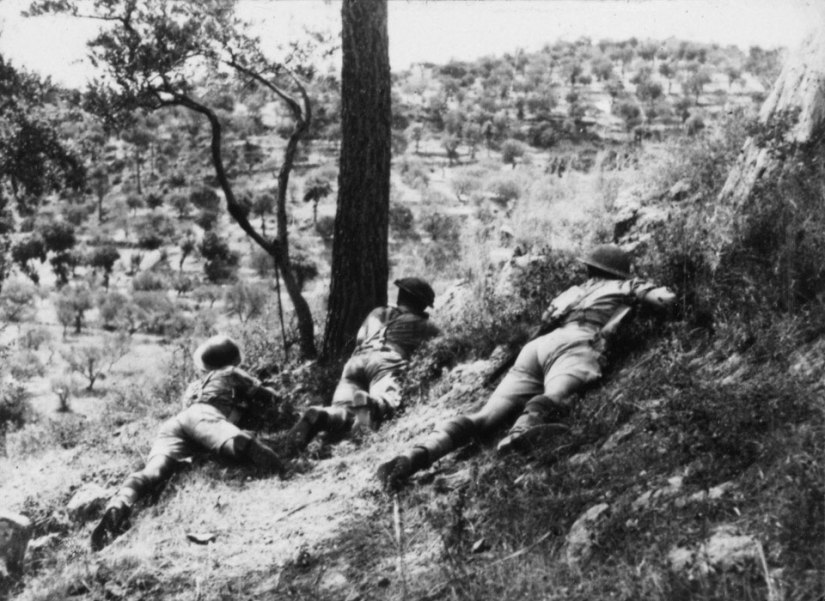
#OnThisDay 1944 The 38th (Irish) Division moved out of Tordimonte towards Lake Trasimeno just north of Rome, Italy. Two Irish soldiers from the 6th Bn. Royal Inniskilling Fusiliers were killed in the move, most likely by German shell fire. The regiment’s war diary recorded it as follows:
“1200 one ‘stonk’ of 6 shells fell among B Coy, killing 2 ORs & wounding 6 others”.
The deceased were:
Thomas Crumley, Fermanagh
Thomas Mahoney, Limerick

6th BN Inniskilling Fusiliers

Lt George Ross McGusty Died on the Western Front 1916

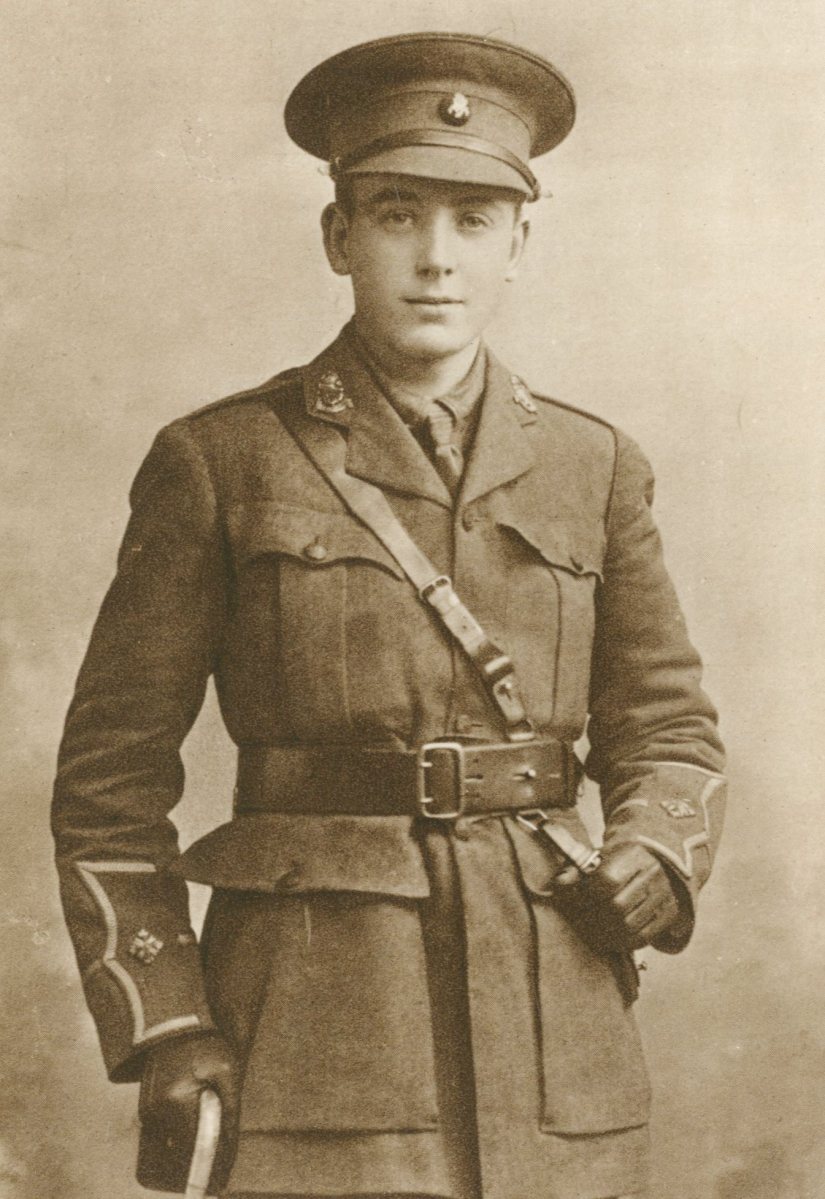
#OnThisDay 1916 Lt George Ross McGusty from Lesson Park, Dublin died from his wounds suffered in battle at Abbeville, France. McGusty, a talented concert pianist, was a student in Winchester College before enrolling in Oriel College, Oxford where he studied Law. McGusty enlisted in August 1914 serving with the 8th Batt Royal Irish Rifles. He was an only child.
A brass plaque in his memory was erected in the north aisle of St Patrick’s Cathedral in Dublin.

George McGusty

William of Orange Lands in Carrickfergus 1690

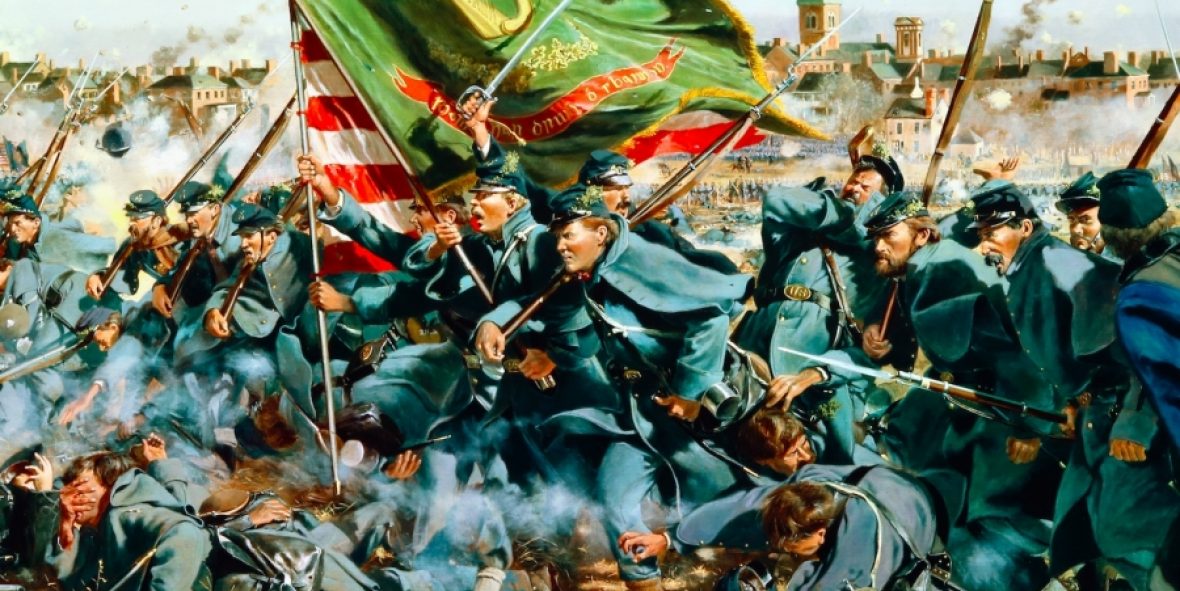
#OnThisDay 1690 William of Orange landed at Carrickfergus at the head of a massive army. 300 ships landed over 31,000 Dutch, English, French, Irish & soldiers from elsewhere as well as over 1000 horses & 40 artillery pieces. When he met up with the rest of his forces, his army numbered roughly 36,000.
Within a month, William would defeat King James and his Jacobite forces at the famous  Battle of the Boyne, changing Ireland forever.

William ORange