Blog

Irish Casualties at Waterloo 1815

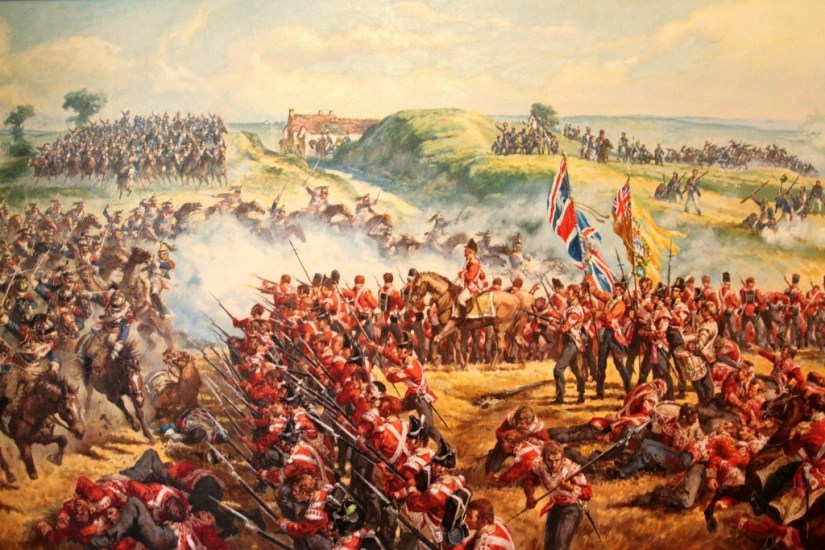
30% or nearly 8,500 of the Duke of Wellington’s 28,000 British soldiers, including Wellington himself, were Irish. Based on a casualty rate of 25% it can be ascertained that roughly 2,000 Irishmen were killed or wounded at the Battle of Waterloo.
This was much the same throughout the campaign and indeed in the earlier famous naval encounter, the Battle of Trafalgar.

battle_of_waterloo_copy_2.3mb_1024x683

Duke of Wellington defeats Napoleon at Waterloo 1815

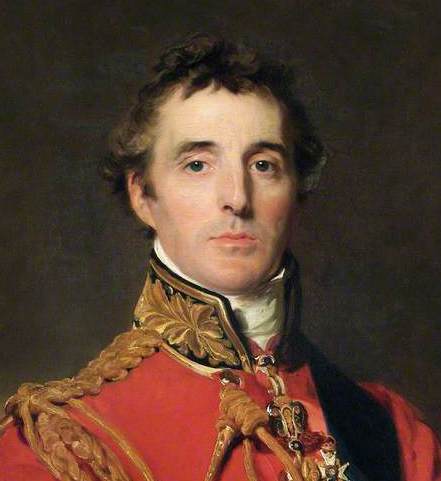
#OnThisDay 1815 The Duke of Wellington, defeated Napoleon Bonaparte at the Battle of Waterloo. He is thought to be one of the greatest commanders ever. The Duke was born, Arthur Wellesley in Dublin & educated in Trim…but as Daniel O’Connell said of Wellesley

being born in a stable doesn’t make a horse’.

This quote has often been misattributed to Wellington but it was said about him not by him. As with most Irish History, Wellington’s Irishness is contested. Certainly Anglo-Irish, he does not fit with the nationalistic version of Irish history, not does he fit into the the oppressive British history in Ireland version either.

Lord_Arthur_Wellesley_the_Duke_of_Wellington

Nora Connolly O’Brien Passed Away 1981

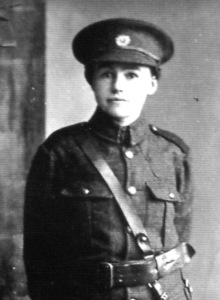
#OnThisDay 1981 Nora Connolly O’Brien, Cumann na mBan member, Irish republican, politician & daughter to executed leader James Connolly, passed away.

“On 22 April she led the Cumann na mBan first aid corps that accompanied the Belfast Volunteers to the Northern Division’s mobilisation in Co. Tyrone. On receipt of the countermanding order from Eoin MacNeill, she travelled by night train to Dublin to obtain clarification from her father. On Easter Monday morning (24 April) she returned to Tyrone bearing a counter-order from Patrick Pearse. After fruitless efforts to remuster the Northern Division, she and her sister Ina returned to Dublin, walking most of the distance from Dundalk owing to rail disruptions, passing a night in a field near Balbriggan, and arriving in the capital hours after the insurgents’ surrender. She accompanied her mother on a final visit to her wounded father imprisoned in Dublin castle, hours before his execution (12 May).

Nora is buried in Glasnevin Cemetery.

Nora_Connolly_O'Brien_Young

Confederate Colonel James Hagan Born in Tyrone 1822

#OnThisDay 1822 Confederate Colonel James Hagan was born in Tyrone. His family moved to America when he was still young. As an adult, he moved to Mobile Alabama to work in his prosperous uncle’s business.
When the Mexican-American War broke out, Hagan joined Hays’s Texas Rangers, a cavalry unit. He was recognised for his gallantry at the Battle of Monterrey. He was commissioned a captain in the 3rd U.S. Dragoons in 1848 and  discharged on July 31, 1848. He returned to Alabama afterwards.

When the Civil War began, Hagan organised and was elected captain of a cavalry company for the Alabama Militia, the “Mobile Dragoons. He then transferred to a Mississippi Cavalry Regiment and led a charge at the Battle of Perryville.

He fought on through the war, was injured and was passed over for promotion even though he commanded a brigade in the Civil War, he was never officially promoted to Brigadier General. His pre-war fortune was converted to Confederate money so he was penniless after the war.

220px-James_Hagan,_head-and-shoulders_portrait,_facing_right

The Battle of Bunker Hill 1775

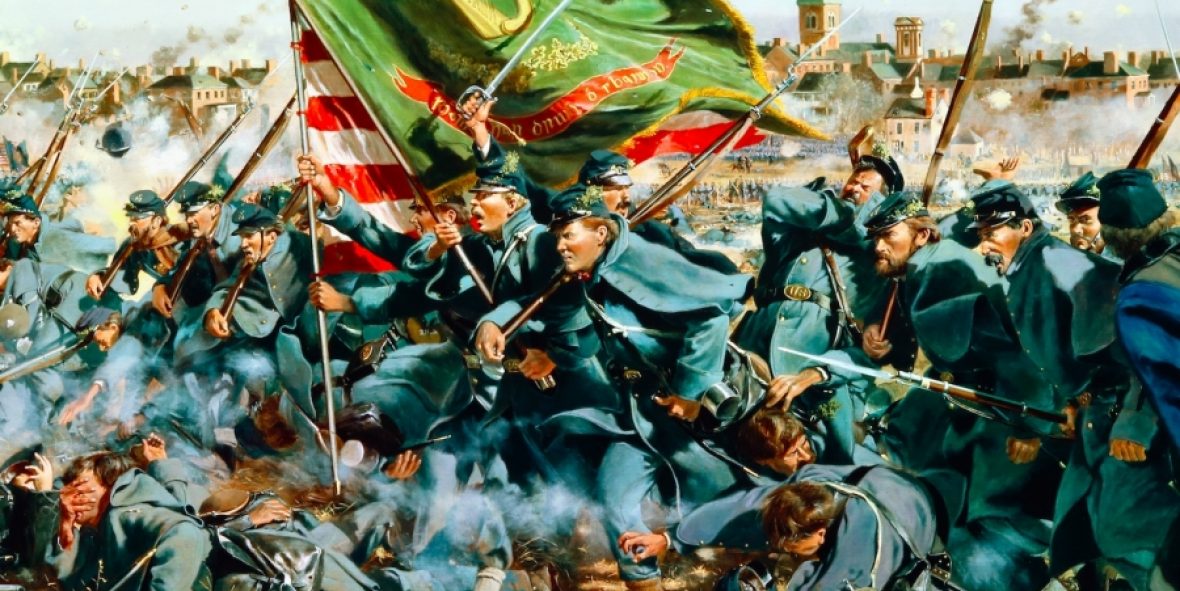
#OnThisDay 1775 Irishmen were among the two armies that clashed at the Battle of Bunker Hill during the American Revolutionary War. The 18th (Royal Irish) Regiment of Foot fought for the British Army and later became the Royal Irish Regiment with its depot in Clonmel, Tipperary. Some of these Irish men in the British Army deserted and joined the Americans.

The Rebels had 21 Irish officers, six of whom were definitely Irish born. They were Maj. John Goffe, Lt. Thomas McLaughlin, and Capts. Andrew Browne, David Cowden, Daniel Flood, and Hugh McClellan. The Continental Army at Bunker Hill also had 269 enlisted Irishmen plus hundreds more Irish-Americans in their ranks.

The Battle of Bunker Hill was a pyrrhic victory for Britain. Though they won the ground, it was at a very heavy cost of life.  The British lost over a thousand men, more than twice that of the Americans.

BUnker HIll