Hi,
I'm David, I'm from Ireland. I am an avid fan of history. I have my B.A. in History, my M.A. in Military History and Strategic Studies,a Post Qualification Diploma in History and I've been teaching History for five years now.
I wanted to create a podcast that examines, in great detail, major Irish battles and battles allover the world in various wars that Irish people played a significant part in.
Hope you enjoy.
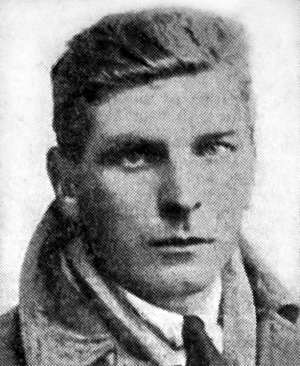
#OnThisDay 1920 Vol William Heffernan (pic) & RIC Constable Tim Quinn were both killed in a shootout in Castlemartyr, Cork. Quinn & his sergeant happened upon a car with IRA men in it. Vol. Aherne shot Quinn & Sergeant Curley shot Heffernan as they drove off.
#OnThisDay 1819 Gustavus Conyngham, ‘The Dunkirk Pirate’ passed away. Born in Donegal, Gustavus emigrated to America & became a sailor where he became “the most successful of all Continental Navy captains”, sinking or taking over sixty ships between 1777-79.
#OnThisDay 1920 IRA Captain Patrick Moran was arrested for the death of British officer Lt. Ames on Bloody Sunday. Despite having an alibi that put Moran in Blackrock that morning, that was backed by a DMP constable, Moran was found guilty& hanged 14 March 1921
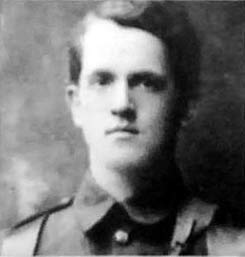
#OnThisDay 1920 Patrick and Harry, two IRA Volunteers were arrested by D Coy Auxiliaries while thrashing corn at their family home in Shanaglish, Galway. Patrick was suspected of having raided the home of an ex-RIC man, WIlliam Carr, for a firearm.They were never seen alive again.
‘They were first interrogated in Gort RIC barracks’, then ‘the brothers were made carry large stones and run before the lorries, the Crown Forces prodding them with bayonets until they fell exhausted… they were then tied to the lorries and dragged along the road’ to Drumharsna Castle near Ardrahan, where ‘four shots were fired in Moy O’Hynes’ (also called Moyvilla) wood near Kinvara on Friday night, about 6 miles from Gort. Men answering their description were seen in O’Hynes’ wood dead or in a dying state on Saturday, and several saw Crown Forces in the wood on Sunday night’.
‘Their bodies were taken to a spot near where they were killed and burned, but the Auxiliaries neglected to bury the bodies and instead threw them into a muddy and oil covered pond where they were discovered 10 days later.
‘Evidently the brothers had been savagely beaten and tortured. Two of Harry’s fingers were cut off. Patrick’s legs and wrists were broken. Both their skulls were so fractured that a doctor speculated that hand grenades were blown up in their mouths’.
‘The bodies were hideously mutilated. Patrick was found lying on his back, and Harry on his right side, about 2 yards apart, and 4 yards from the verge of the pond. They were naked, not a particle of clothing remained, save one of Harry’s boots. His once graceful figure was a mass of unsightly scars and gashes; two of his fingers were lopped off; his right arm was broken at the shoulder, being almost completely severed from the body; whilst of the face nothing remained save the chin and lips, and the skull was entirely blown away. The remains were badly charred. Patrick’s body was not charred to the same extent as his brother’s. His back and shoulders remained intact. The limbs of both were charred to such an extent that the bones were exposed, the flesh and sinews being completely burned away. Mock decorations in form of diamonds were cut along Pat’s ribs and chest. Both his wrists were broken and also his right arm above the elbow. Patrick’s face was completely lashed away, so as to be unrecognisable, and his skull was very much fractured, as if a bomb had been forced into his mouth and exploded. The bodies were then set alight in a wood, where it is believed that they may have been still alive. Patrick’s back was the only part of his body that was not blackened by burns. He was evidently thrown on his back before being set on fire. Henry’s body was scorched all over.
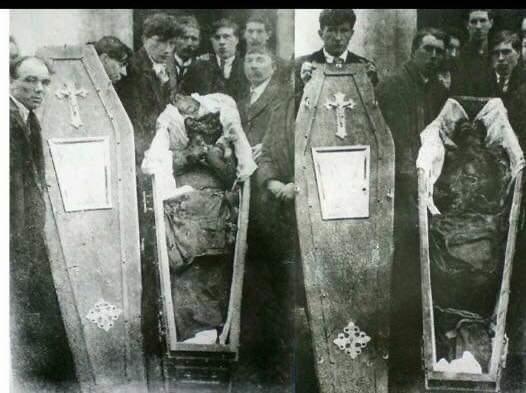
Their bodies were identified by their sister. ‘On Tuesday 7 December 1920, shortly before the remains were removed from Shanaglish church for internment, a party of 2 policemen, 2 auxiliaries, and 2 soldiers, under the command of Lieutenant McCreery, 17th Lancers, and accompanied by Dr. James Sandys, Gort, arrived in a lorry, entered the church and unscrewed the coffin lids. Some eyewitness accounts also state the Tans mounted a machine gun on the wall of the church grounds, while the mock inquest was held inside. The coffins lay side by side covered by floral wreaths and wrapped in linen cloths the Republican colours, were laid side by side on the floor in the centre of the church, and were guarded by a party of young men. Doctor Sandys told Father Nagle, Beagh Parish Priest, that he had orders to view the bodies before internment, and he caused the church to be cleared. The bodies were not removed from the coffins. Doctor Sandys knew Patrick Loughnane by sight, but could not recognise him in either of the two bodies according to testimony he later gave to a military inquest’.
#OnThisDay 1913 The Irish Volunteers were formed at the Rotunda in Dublin with Eoin MacNeill as its head. Pearse, Davitt & other nationalists from the Gaelic League & AOH attended. It was formed in direct response to the formation of the UVF the previous year. The Volunteers split in 1914 after John Redmond’s speech at Woodenbridge asking them to join the British War effort. The majority of the Volunteers sided with Redmond and were called National Volunteers but roughly 10,000 stayed in Ireland keeping the title IV and fought in the Easter Rising. Men from both the IV and the NV played a vital role in the War of Independence.



 The Irish at War